
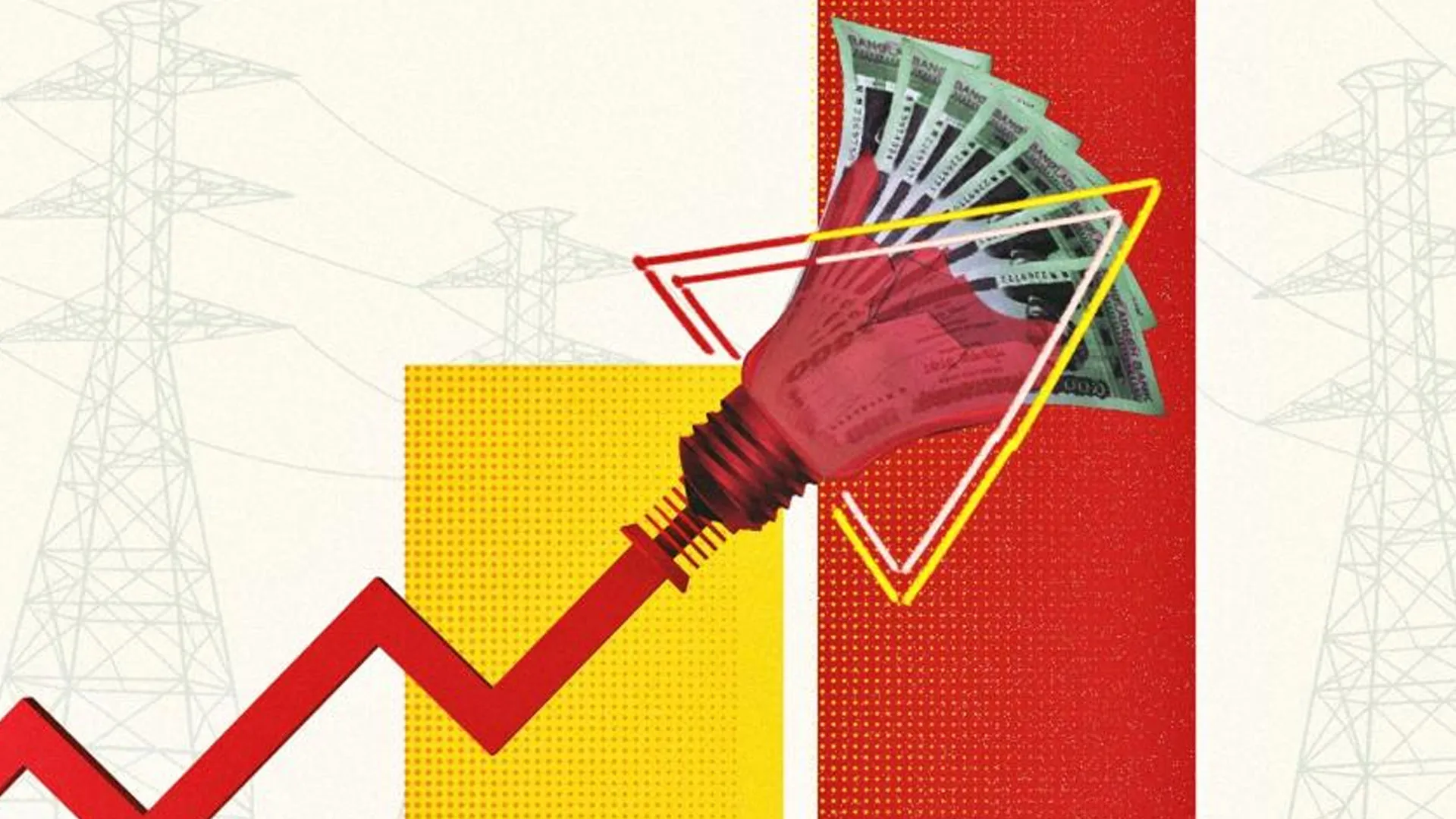
Allegations have surfaced at a public hearing on proposals to increase electricity prices that the burden of inefficiency, system loss, and capacity charges in the power sector is being forced upon ordinary people. Speakers stated that consumers should not bear the responsibility for mismanagement in the power sector; rather, initiatives should be taken on how to keep electricity prices affordable by reducing illogical expenditures.
The public hearing regarding the proposal to increase wholesale electricity prices was organized yesterday, Wednesday. Citing increased fuel costs, the high value of the dollar, and a reduction in subsidies, the Power Development Board proposed raising the wholesale price by Tk 1.20 to Tk 1.50 per unit, which is about 17 to 21 percent higher than the current price.
However, according to the calculations of the technical evaluation committee of the Bangladesh Energy Regulatory Commission, if the government completely withdraws the subsidy, the wholesale price of electricity could rise from Tk 7.04 to Tk 12.55 per unit. In other words, the price could increase by approximately 78 percent. This calculation is based on the projected expenses of the power sector in the 2025-26 fiscal year. A large portion of this expense will go toward paying the capacity charges or plant rentals for power stations.
According to data from the technical evaluation committee, gas-based power plants are currently utilizing about 40 percent of their capacity. On the other hand, coal-based plants are operating at 61 percent capacity, and imported power plants are operating at 77 percent capacity. Participants alleged that the burden of capacity charges, fuel costs, and system losses is ultimately being placed on the shoulders of ordinary consumers.
According to the Power Development Board’s estimates, the cost of generating per unit of electricity this year could rise to Tk 13.09. The agency reported that the average production cost in the 2022-23 fiscal year was Tk 11.04. Although it decreased slightly to Tk 10.96 in the following fiscal year, it is projected to increase again to Tk 11.83 in the 2024-25 fiscal year.
At the public hearing, Power Development Board Chairman Mohammad Rezaul Karim said that the proposed price hike aims to adjust only a portion of the financial deficit, not the entirety of it. According to him, the government still has to bear a large subsidy in the power sector.
Consumers Association of Bangladesh President A.H.M. Shafiquzzaman stated that the burden of inefficiency, delays in project implementation, excessive expenditures, and capacity charges should in no way be imposed on ordinary consumers.
Former General Secretary of the Communist Party of Bangladesh, Ruhin Hossain Prince, said that it is possible to reduce electricity prices through proper planning and cost control. He claimed they were ready to present data and evidence regarding this matter. He further alleged that no economist’s opinion had been sought regarding the impact an electricity price hike would have on the living standards of ordinary people and the country’s economy.
Mohammad Jamal Uddin Mia, a director of the garment factory owners’ organization, said that if electricity prices increase, the country’s export-oriented industries, particularly the garment sector, will fall further behind in international competition. In his view, the additional production costs will plunge the industrial sector into a new crisis.
Professor Syed Mizanur Rahman, Associate Dean of Daffodil International University, stated that the money the government provides as subsidies also ultimately comes from the people. Therefore, emphasis should be placed not only on the government’s financial security but also on the survival capability of ordinary people. He warned that if the energy regulatory commission takes a stance solely in favor of the power agencies instead of public interest, it will create the risk of losing public trust.
At the public hearing, Bangladesh Energy Regulatory Commission Chairman Jalal Ahmed also acknowledged that the burden of excessive capacity charges, inefficient production costs, and system losses should not be forced upon ordinary consumers. He noted that if an uninterrupted electricity supply could have been ensured, industrial factories would not have had to set up separate power plants. This would have reduced gas wastage and made national grid-based power generation more cost-effective.

Discussion
No published comments yet. Be the first to join the discussion.