
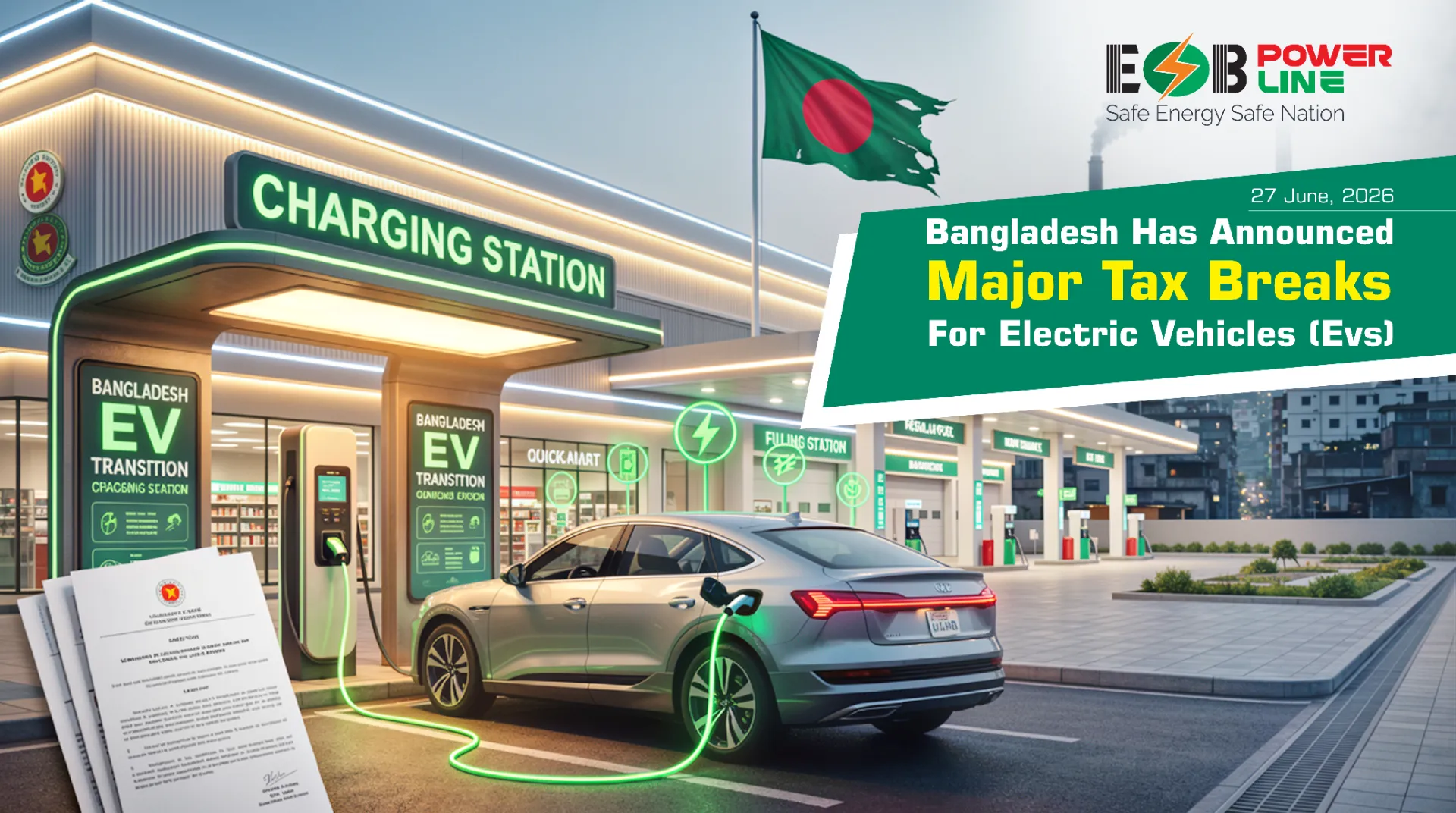
Bangladesh has launched a major fiscal campaign to reform its transport sector, deploying aggressive custom duty rollbacks, VAT holidays, and relaxed credit limits to encourage electric vehicle (EV) adoption. The push comes as the state attempts to reduce its heavy reliance on imported oil, which currently consumes 63.41% of the country’s total petroleum supply.
According to data released today by the Dhaka Chamber of Commerce & Industry (DCCI) and the Bangladesh Sustainable and Renewable Energy Association (BSREA), the government has set a hard target mandating 30% EV adoption across all state-run and autonomous institutions by 2030.
The Dual Realities of Fleet Electrification
The joint industry brief reveals a stark contrast in the local transport sector. Out of more than 6.7 million registered vehicles on domestic roads, a mere 669 are formally registered electric passenger cars. Conversely, an estimated 6 million electric three-wheelers (E3Ws) are already operating in a completely unstructured, informal local manufacturing ecosystem.
"Our primary challenge is one of structure and power infrastructure parity," stated Taskeen Ahmed, President of the DCCI, during the presentation of the policy recommendations. While operating costs for EVs are highly attractive—averaging just 2.8–3.8 BDT/km compared to the steep 11–14 BDT/km required for internal combustion engines—the initial purchase price remains too high for mass adoption.
Sweeping Fiscal Revisions Detailed
To bridge this gap, the government’s latest fiscal updates offer substantial relief to manufacturers and infrastructure developers:
Charger Deployment Stimulus: Custom duties and auxiliary taxes on commercial EV charging station hardware have been slashed from 39.75% to a minimal 1%.
Long-Term Manufacturing Tax Holidays: Complete tax exemptions on imported raw materials and assembly components for local EV and e-bike plants are locked in until June 30, 2031. Furthermore, local production VAT waivers on hybrid cars, E-buses, and E-trucks will remain in force until 2030.
Registration and Withholding Tax Relief: Advanced Income Tax (AIT) for EV owners has been reduced from a flat Tk 200,000 down to a tiered system of Tk 25,000 to Tk 100,000. Withholding taxes on commercial charging network operations have been cut from 5% to 0%.
Credit Enhancements: Central credit limits for green auto loans have expanded from Tk 60 lakh to Tk 80 lakh, with the debt-equity ratio moving to a generous 80:20 allocation.
The Energy Paradox: Grid vs. Greener Drivetrains
Despite these fiscal incentives, the report notes that the primary obstacle to the transport transition is the country's ongoing energy crisis. Bangladesh's national electricity demand hovers around 17,000 MW, yet primary fuel shortages mean grid deficits regularly force critical manufacturing industries to run at just 50% of their capacity. Utility executives warn that adding substantial vehicle charging demands to an already overloaded grid could worsen load-shedding unless generation capacity expands.
Furthermore, a cross-country analysis included in the DCCI brief points out an environmental concern, citing Japan's experience. In countries where the grid mix relies on fossil fuels (such as Japan at 67%, or China and India where coal dominates), charging an EV simply moves carbon emissions from the tailpipe to the power plant stack. This results in very marginal lifecycle emissions reductions compared to high-efficiency hybrid options.
To prevent a similar bottleneck, Bangladesh is currently drafting a National Energy Storage Roadmap. This initiative aims to pair future charging infrastructure with zero-duty solar PV components, which are backed by a 5% consumer tax rebate until 2031.


Discussion
No published comments yet. Be the first to join the discussion.