
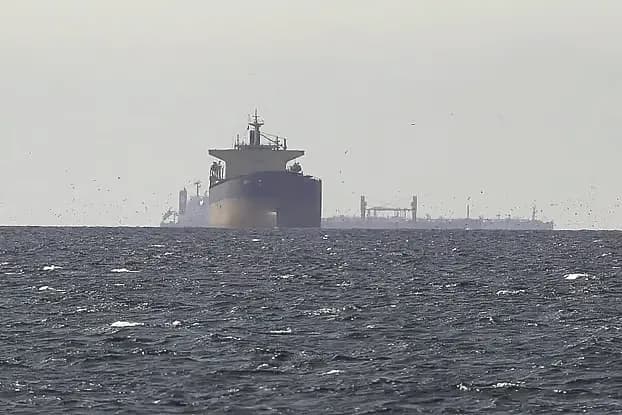
After being stranded in the Persian Gulf for more than two months due to the Iran war and military tensions, two Chinese oil supertankers have crossed the blockaded Strait of Hormuz.
Amid the tense situation in the Middle East, two Chinese supertankers carrying 4 million barrels of fuel oil have passed through the blockaded Strait of Hormuz. International news agency Reuters reported that the vessels had been stranded in the Persian Gulf for a long time due to the Iran war.
According to data from shipping tracking and analytics firms LSEG and Kpler, the two tankers are named Yuan Gui Yang and Ocean Lily. On Wednesday, the two vessels crossed the highly crucial Strait of Hormuz.
It is understood that each tanker holds approximately 2 million barrels of fuel oil. The Yuan Gui Yang tanker was loaded with oil on February 27. The very next day, the United States and Israel launched attacks on Iran.
On the other hand, the Ocean Lily tanker was also loaded with oil in late February or early March. Subsequently, both ships became stranded in the Persian Gulf due to the war situation.
In response to the attacks by the US and Israel, Iran launched retaliatory strikes on various US installations in the Middle East. Simultaneously, the Strait of Hormuz, one of the world’s most critical shipping routes for global trade, was effectively closed, causing major disruptions to oil exports from the Middle East.
As approximately 20 percent of the world’s fuel oil and liquefied gas is transported through this waterway, the impact of the crisis quickly hit the international market. Oil prices surged suddenly, and numerous fuel tankers were stranded.
Iran has stated that to use the Strait of Hormuz, vessels must pay designated tolls and navigate following the routes specified by Tehran.
Meanwhile, to increase pressure on Iran, the United States has feelings imposed a blockade on vessel movements from the country’s ports. However, international media reported that a fragile ceasefire has recently taken effect between the two nations.
One of the key conditions of the ceasefire, which came into effect on April 8, was to normalize the situation in the Strait of Hormuz. European countries are also continuing talks with Tehran to fully reopen the strait.
According to analysts, if stability does not return to the Strait of Hormuz, fresh volatility could arise in global fuel supply, shipping costs, and international oil prices.
After being stuck for more than two months, the two Chinese supertankers carrying 4 million barrels of oil have crossed the Strait of Hormuz. Due to the tensions in the Middle East, uncertainty still remains in the global fuel market.
Discussion
No published comments yet. Be the first to join the discussion.