
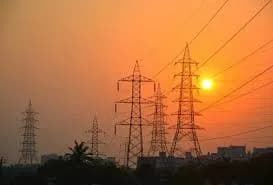
Although the country’s power generation capacity has increased, it is not possible to generate electricity according to demand due to the fuel crisis, the Power Division has stated. As a result, load shedding is increasing amid the ongoing heatwave.
According to data from the Ministry of Power, Energy and Mineral Resources, the maximum demand for electricity today, Thursday, has been estimated at around 17,000 megawatts. However, at the same time, production could be around 14,000 megawatts. This could create a shortfall of about 3,000 megawatts of electricity, which will have to be managed through load shedding.
This information was disclosed on behalf of the Power Division at a press conference held in the ministry’s conference room. It was stated there that the demand for electricity in the country on Wednesday was 15,767 megawatts, against which 13,681 megawatts could be supplied. Consequently, a shortfall of about 2,086 megawatts of electricity was created.
Speaking at the press conference, Umme Rehana, Joint Secretary of the Power Division, said that although there is adequate power generation capacity in the country, the plants cannot be operated at full capacity due to the crisis of gas and other fuels. Yesterday, 5,274 megawatts of electricity were generated from gas-based plants, although the total capacity of these plants is 12,154 megawatts. That means, less than half the capacity could be utilized due to the fuel crisis.
She further informed that the ongoing war situation in the Middle East has impacted the international fuel supply system, causing gas supplies to be disrupted in the country as well.
According to Power Division data, about 2 billion cubic feet of gas is required daily to utilize the full capacity of gas-fired power plants. Even if 1.2 billion cubic feet of gas could be supplied, it would have been possible to generate about 7,200 megawatts of electricity. But currently, only 850 to 900 million cubic feet of gas is being supplied.
To keep production costs in check, the use of expensive furnace oil and diesel-based plants has also been kept limited, the Power Division reported. The press conference further noted that electricity consumption has risen rapidly due to the expansion of industrial zones and extreme heat. However, against the additional demand, the fuel crisis has become more severe.
Among the country’s eight coal-fired power plants, one unit of India’s Adani power plant remains closed due to a technical glitch. It is expected to resume operations by April 26. At the same time, power generation has decreased by 650 megawatts due to an outage at a power plant unit in Banshkhali. It may be reconnected to the national grid after April 28.
The Power Division hopes that an additional 1,982 megawatts of electricity will be added to the national grid by the first week of next May.
Regarding load shedding management, the Power Division stated that instructions have been given to supply electricity by coordinating between rural and urban areas so that irrigation activities are not disrupted. Alongside this, efforts are underway to ensure an electricity supply by maintaining a balance across different areas. However, the capital, Dhaka, has been kept free from load shedding for the time being.
Discussion
No published comments yet. Be the first to join the discussion.